What Do EMA’s Updated Shortage Prevention Guidelines Mean for Pharmaceutical Leaders?

What is on this page?
Click to jump to a specific section below.
Marketing authorization holders are expected to establish, maintain, and keep Shortage Prevention Plans up to date for prescription medicines and certain other products. The European Medicines Agency (EMA) advises companies to be ready to implement the plans before the anticipated legal deadline in mid-2027.
The guidance is rightly broader than any single operational discipline. It addresses the structures needed to identify, prevent, mitigate, and manage shortage risks. Yet for temperature-sensitive products, one operational question deserves explicit leadership attention: can you see and act on condition-related risk across the complete product journey?
Why Are Medicine Availability and Product Integrity Connected?
Most medicine shortages in the EU in 2024 involved antimicrobials (76%), followed by painkillers and anesthetics. These are often temperature-sensitive products and must be stored within strict temperature ranges to ensure they work safely and effectively.
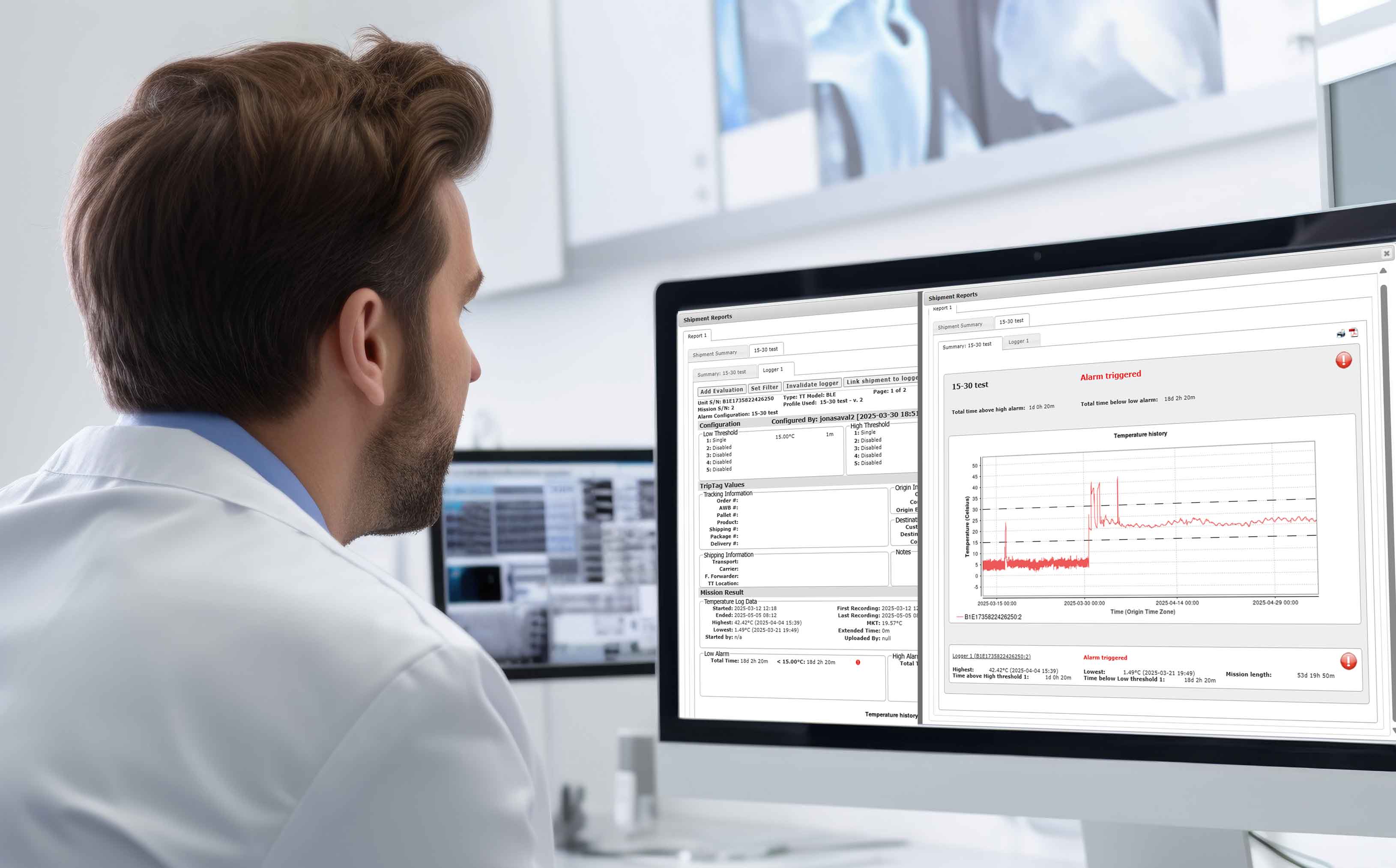
A temperature event may not mean that a medicine is unusable. It does, however, create a decision that must be supported by reliable data. If relevant records are fragmented across manufacturers, logistics providers, depots, clinical sites, and local systems, teams may need to reconstruct the product’s temperature history before they can determine what happens next.
Collecting temperature data is not the same as being ready to act on it.
During that time, product may remain in quarantine. Replacement shipments may be considered. Operational teams may spend hours gathering files and aligning stakeholders. In clinical supply, a delayed decision can place pressure on dispensing timelines and the patient experience. In commercial supply, the same friction can affect inventory availability, distribution planning, and waste.
This is why shortage prevention and temperature management should not be treated as unrelated conversations. Both depend on visibility, trustworthy information, clear ownership, and the ability to make timely, risk-based decisions.
From Monitoring Records to Decision Infrastructure
Most pharmaceutical organizations already collect substantial amounts of temperature data. The strategic question is whether that data can move with the product, remain accessible across organizational boundaries, and support consistent decisions when risk emerges.
Recent research from the US National Institute of Standards and Technology on digital twins in biopharmaceutical supply chains points to a similar challenge. Technologies such as real-time monitoring and simulation may improve visibility and responsiveness, but adoption is constrained by data quality and accessibility, privacy and security, and uncertainty about return on investment.
The lesson extends beyond digital twins. Advanced analytics, automation, and artificial intelligence cannot compensate for incomplete context or disconnected workflows. Before you ask what a new technology can predict, you should ask whether the underlying data is complete, trusted, accessible, and connected to a defined action.
How Can Temperature Data Strengthen Shortage Preparedness?
1. Reveal vulnerabilities across handoffs.
Temperature-sensitive products pass through many organizations, systems, and physical environments. End-to-end visibility can help you identify where data gaps, manual transfers, or unclear ownership weaken control. These are not only operational inconveniences. They are vulnerabilities that should inform resilience planning.
2. Shorten the path from event to decision.
When temperature exposure data can be evaluated alongside approved product stability information and established workflows, you can reach consistent conclusions faster. This can reduce time spent gathering evidence and help avoid unnecessary quarantine, resupply, or disposal when the available data supports continued use.
3. Create a shared operational picture.
Shortage prevention is cross-functional. Quality, supply chain, clinical operations, logistics partners, procurement, and information technology may all hold part of the answer. A connected data environment can provide the stakeholders a common record of what happened, what was assessed, and what action was taken.
What This Means Across Clinical and Commercial Supply
In clinical supply chains, product quantities may be limited, replacement can be complex, and dispensing timelines matter directly to trial execution. A site that detects a temperature event needs a clear answer on whether the product can be used. Slow or fragmented evaluation can increase workload for sponsors and sites while creating avoidable pressure for patients.
In commercial supply chains, scale changes the problem. Temperature records may span multiple lanes, carriers, warehouses, and markets. Leadership needs to understand whether local events can be evaluated consistently and whether recurring patterns are visible enough to support preventive action.
The operating models differ, but the leadership requirement is similar: condition data should support decisions at the speed and scale of the supply chain.
A Temperature-Data Readiness Review
When preparing for future Shortage Prevention Plan requirements, asking the following questions can help reveal whether temperature management is contributing fully to resilience:
- Can we trace relevant temperature exposure across the complete product journey, including outsourced partners and sites?
- Where do manual files, email exchanges, or disconnected systems slow down evaluation?
- Can decision-makers access the right data without reconstructing records from multiple sources?
- Are product stability information and temperature workflows connected well enough to support consistent evaluation?
- Do quality, supply chain, clinical operations, and logistics partners work from a shared data base?
- Can we identify recurring excursion patterns and use them to reduce future risk?
- Can we demonstrate not only what happened, but how the decision was reached and documented?
A gap in any one of these areas does not automatically mean that supply is at risk. It does however indicate where stronger data, governance, or integration could improve preparedness.
What Are the First Steps in Building a Shortage Prevention Plan?
The anticipated mid-2027 deadline may appear distant, but resilience capabilities are rarely created by completing a template alone. They are built through cross-functional ownership, reliable data foundations, tested workflows, and a clear understanding of where decisions slow down.
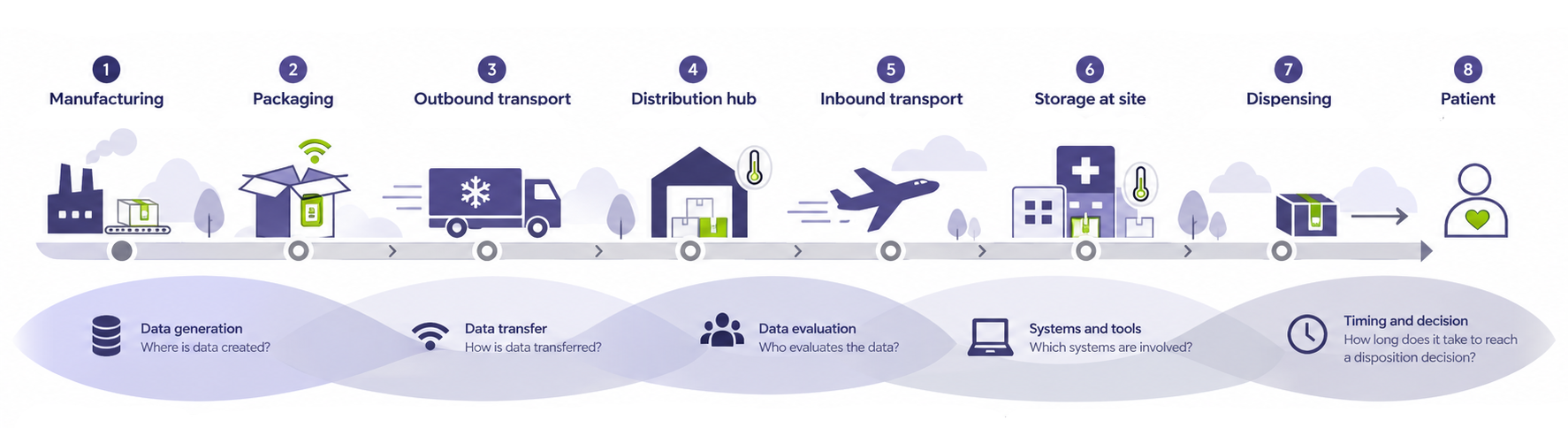
A practical starting point is to map the current temperature-data journey for a priority product or supply pathway. Identify where data is generated, how it is transferred, who evaluates it, which systems are involved, and how long it takes to reach a disposition decision. This creates a grounded view of operational readiness and helps distinguish technology gaps from process or governance gaps.
The objective is not to collect more information for its own sake. It is to make the information already being generated more useful when product availability, quality, and patient needs depend on the next decision.
Resilience Becomes Real at the Point of Decision
EMA’s updated guidance reinforces a direction that many pharmaceutical leaders already recognize: vulnerabilities should be understood before they become shortages, and preventive measures should be ready before they are needed.
For temperature-sensitive medicines, that ambition reaches beyond monitoring devices and compliance records. It requires connected, decision-ready data that help you understand product condition, coordinate action, and respond with confidence.
A strong Shortage Prevention Plan describes how risk will be managed. A resilient supply chain provides the operational truth needed to manage it.
Sources
International Council for Harmonisation. ICH Q9(R1): Quality Risk Management. January 2023.
You may also be interested in

Data-driven supply chains: improving your excursion rate and temperature performance in 5 steps

Join us at Clinical Trial Supply Europe 2022
LogiPharma Lyon 2024
You may also be interested in

How To Minimise the Environmental Impact of Cloud Operations