Fridge Temperature Monitoring for Clinical Sites and Pharmacies: A Practical Guide
What is on this page?
Click to jump to a specific section below.
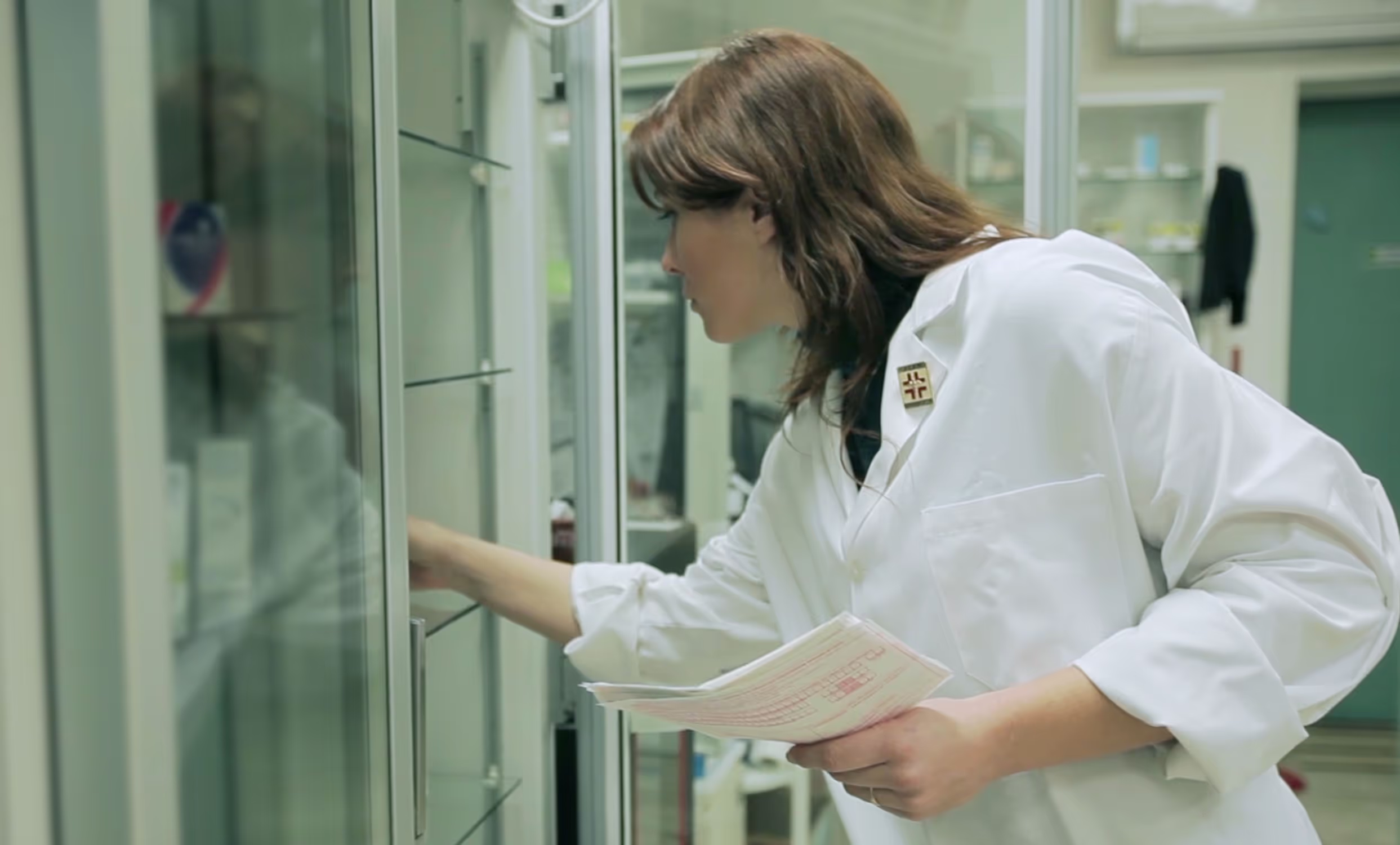
A fridge temperature monitoring system takes the manual work out of keeping medications safe: wireless loggers measure the temperature continuously, cloud software keeps a complete record, and the right people get an alert as soon as something goes wrong. This guide is for clinical sites, pharmacies and other organisations that store medications, whether they have a single fridge or several sites.
Why does fridge temperature matter for medications?
Many medications must be stored between 2 and 8 °C to stay safe and effective. A temperature excursion, a period outside the permitted range, can cause irreversible damage that makes medications ineffective or even harmful to patients.
Refrigerators also differ. A good pharmaceutical refrigerator keeps fluctuations within 0.5 °C. An okay one stays below 1 °C but peaks during defrosting. A poor one swings 4.5 °C or more. Continuous monitoring shows you which kind you have. Read more in Enhancing Product Quality and Compliance at Clinical Sites.
Manual logging or automated monitoring?
Recording temperatures by hand carries a risk of errors, data gaps and extra workload, and interventions may come too late to save the products. Automated monitoring changes that:
- Readings: automatically, from every minute to every 18 hours, instead of a few times a day by hand.
- Excursions: an email or SMS alert as it happens, instead of at the next check.
- Overview: all fridges and sites on one dashboard, from anywhere.
- Records: a complete audit trail with electronic signatures, instead of paper with gaps.
- Staff time: staff act only when something needs attention.
How does a cold storage monitoring system work?
- A logger in the fridge measures the temperature continuously through a probe.
- The data is sent to the cloud by a gateway over Ethernet, Wi-Fi or mobile network, or uploaded with a mobile app.
- A cloud dashboard shows every location and its status, with data export for trending and archiving.
- Alerts go to the right people by email or SMS, and events are acknowledged with an electronic signature.
At TSS, we use the TempMonitor BLE logger, which takes up to two probes. The probe sits in a small glycol-filled bottle that acts as a thermal buffer. The TSS Facility Application collects everything in TSS Cloud. The gateway is plug-and-play: it finds the loggers and connects by itself over Ethernet, Wi-Fi or mobile network. If the connection drops, the logger keeps recording and sends the data when the connection is back.
What happens when an alarm goes off?
When a reading goes outside the limits, the logger can sound an audible alarm, and the system sends an email or SMS to the users set up for that location. The person responsible acknowledges the event with an electronic signature, and the audit trail records who took what action, when and why. The full temperature history is there for the investigation.
What should you look for in a fridge monitoring system?
- Accuracy and range. The TSS Ambient & Cold probe is accurate to ±0.3 °C. With the standard probe or the Dry Ice (DI) probe, the logger covers −90 to +80 °C.
- Configurable alarms. Up to 10 high and low alarm limits, plus alerts for low battery, a disconnected probe or calibration due.
- Alerts to the right people. Email and SMS notifications set per user, so the person responsible hears first.
- Compliance. The software is designed for GxP compliance in line with 21 CFR Part 11 and GAMP, and is used for GxP-compliant release of goods.
- Calibration you can trust. TSS loggers are calibrated with actual measurements to ISO/IEC 17025 standards in our own calibration lab in Solna, Sweden, accredited by Swedac. Conformity is confirmed for each logger, not just samples. Certificates are available online around the clock, and calibration is included with every sensor purchase.
- Validation support. TSS delivers a validated system, with IQ, OQ and PQ validation services.
- Reliability. The software is monitored 24/7 with full redundancy and backup, and has a track record of 100% uptime. Loggers run about 12 months on batteries at a 5-minute sample rate and 15-minute communication interval.
- Overview of all sites. Every location on one dashboard, with user access rights you can configure.
Do you also need temperature mapping?
Monitoring and mapping answer different questions. Monitoring is the ongoing measurement of conditions during storage, so you know your products stayed in range. Mapping is a study of the air temperature throughout a storage area, such as a cold room or warehouse. It shows which zones should not be used for storage, and how long it takes to exceed the limits if power or cooling fails. TSS offers both: read more about temperature mapping.
How do you get started?
Getting started is often faster than expected. We help you plan the setup, implement and validate the system, and train your staff.
The TSS Facility Application monitors fridges, freezers and cold rooms at clinical sites, pharmacies and other storage facilities, with real-time alerts and a complete audit trail.
See how to get started >
You may also be interested in

Join us at Clinical Trial Supply Europe 2022

TSS Clinical Trials Digitalization User Forum 2021

Celebrating Women in Tech
You may also be interested in
Cyberattacks on Refrigeration Systems: A Growing Risk for Pharmaceutical Cold Chains