Is your supply chain ready for a digital transformation?
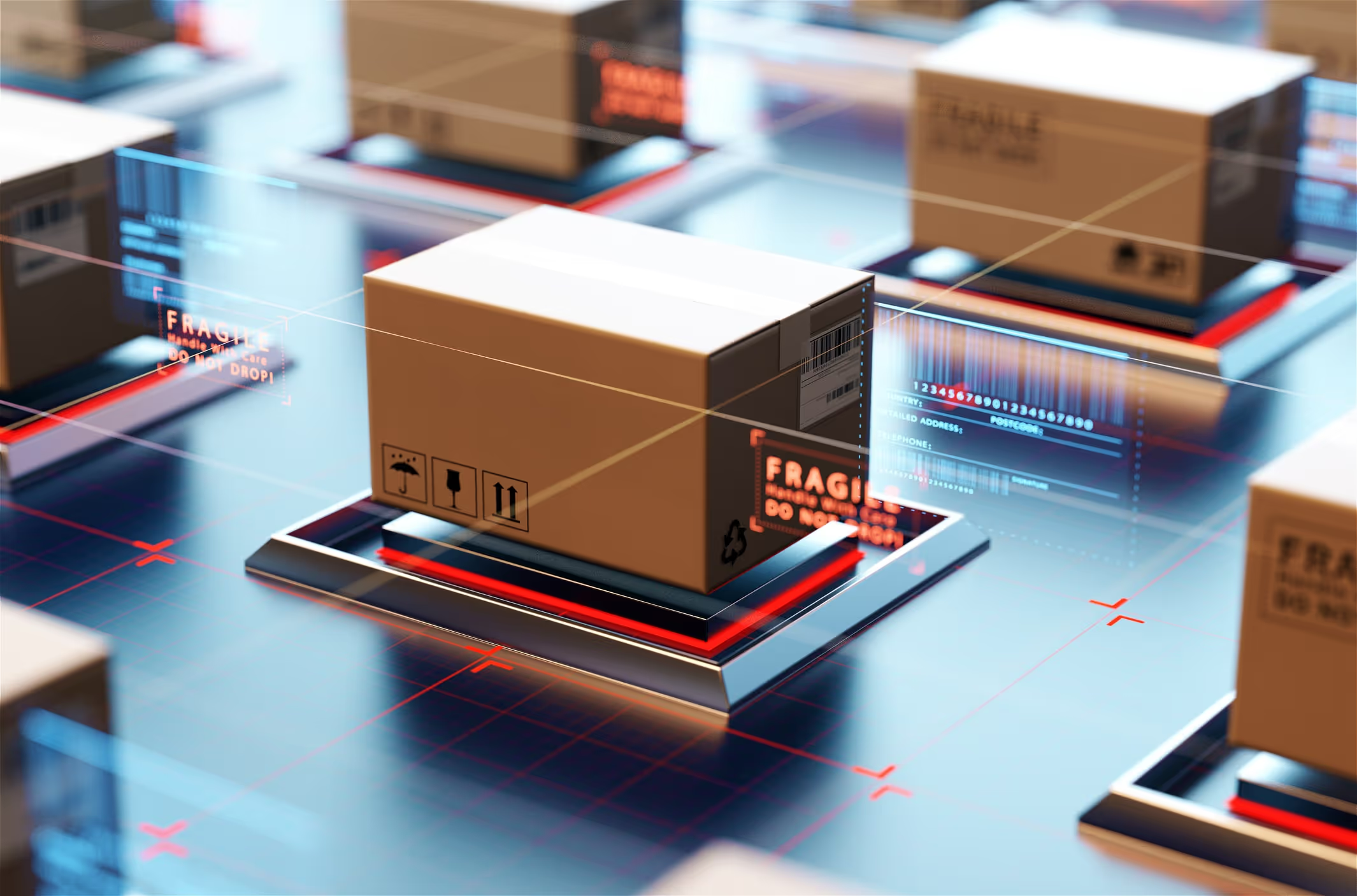
A digitally tracked package on a conveyor system, representing a digital transformation of the supply chain.
Without a doubt, uncertainty and unpredictability will continue to increase. Whether you‘re a pharmaceutical company dealing with temperature excursions, or a manufacturer relying on critical assembly-line components, you’re bound to be affected. The amount of disruption in today’s business climate demands the ability to respond quickly, which can only be done if the entire supply chain is visible.

According to a 2021 IBM global C-suite study, 84% of chief supply chain officers stated that lack of visibility across the supply chain was their biggest challenge. On top of that, pharma companies now expect a better level of visibility. These major global shifts make supply chain digitization in 2022 no longer optional.  

How to embark on the digitalization of your supply chain

According to Gartner, by 2023, at least 50% of large global companies will be using AI, advanced analytics, and IoT in supply chain operations. This means they will either enable new ways of doing business resulting in major industry transformational changes or enable new processes that will result in significant revenue increase or cost savings.

Therefore, the question of digital transformation for temperature excursion teams within pharma companies is no longer which parts of the supply chain should be digitalized but which technologies to choose and how to manage the change.  

The road to digital success in temperature monitoring

Digital technology holds huge potential for pharma, not only in reducing costs. Better access to data and increased visibility of supply chains and operations empowers faster, better decisions. Pharma is no different, and many companies benefit from more accurate planning, efficient manufacturing, and higher productivity levels.  

We are working with pharma and life sciences companies worldwide to drive improvements in their temperature monitoring and drug delivery processes. The foundation of our approach is to ensure the integrity of data and the safety of patients through implementing digital solutions into supply chains.  

You can too. Read more about how you can start transforming your supply chain in our guide “Four steps to digitalize and transform the pharma supply chain “.  

You may also be interested in

A scientist using a tablet in a modern laboratory.

On-demand webinar: New approaches to automating temperature management in clinical trials

Temperature excursion management is a prime example of a clinical process that automation can make more efficient. It is currently a highly burdensome activity, where every temperature excursion is evaluated regardless of how minor they are and if they fit well within the excursion budget.
Read moreDownload Whitepaper
A TSS banner for LogiPharma Lyon 2024, showcasing automated temperature monitoring solutions for the pharmaceutical industry.

LogiPharma Lyon 2024

The Future of Temperature Monitoring: How to lower the CO2 footprint with a Circular Supply Solution
Read moreDownload Whitepaper
Freezer for temperature monitoring.

Achieving FDA and EMA Compliance in Temperature Monitoring

Many pharmaceuticals and biological products require specific temperature conditions during manufacturing, storage, and transport to ensure their quality and safety. Failure to maintain these conditions can lead to product degradation, making them less effective or even dangerous.
Read moreDownload Whitepaper

You may also be interested in

Can You Rely on the Results from Your Clinical Trials?

The success of a clinical trial depends on the reliability of its data. Many investigational drugs are sensitive to temperature, and any temperature deviation can affect their quality and, in the worst case, patient safety. Automated and integrated temperature monitoring solutions help secure data quality, support compliance, and speed up the delivery of new medicines to patients.
Read more

Extending TempMonitor BLE to Ultra-Low Temperatures

Introducing the new TSS Dry Ice Probes, enginereed for accurate and GxP-compliant temperature monitoring down to –90°C. Available in two lengths for flexible setup — built to safeguard product integrity in every environment.
Read more

Subscribe to our newsletter

Sign up for our newsletter to receive all the latest TSS news and insights in temperature management solutions.